Keeping buyers informed while the building goes up
Buyers of off-plan property wait two or three years for their keys. Silence during that time turns into anxiety, phone calls and lost referrals. Regular, honest updates are cheap insurance.
A buyer of an off-plan condo hands over a deposit and a contract payment, then waits two or three years for the keys. During that time the only thing they have is information. When information stops coming, they fill the silence themselves: with worry, with phone calls to your sales team, with messages in buyer groups that you cannot see.
Regular, honest updates cost little. Their absence costs referrals, repeat buyers and a lot of your team's time.
What buyers actually want to know
Buyers ask the same few questions, again and again:
- How far along is construction?
- Is the project on schedule?
- When will my unit be ready?
- What happens next, and when will I need to pay?
A good update process answers these before they are asked.
Construction updates with real photos
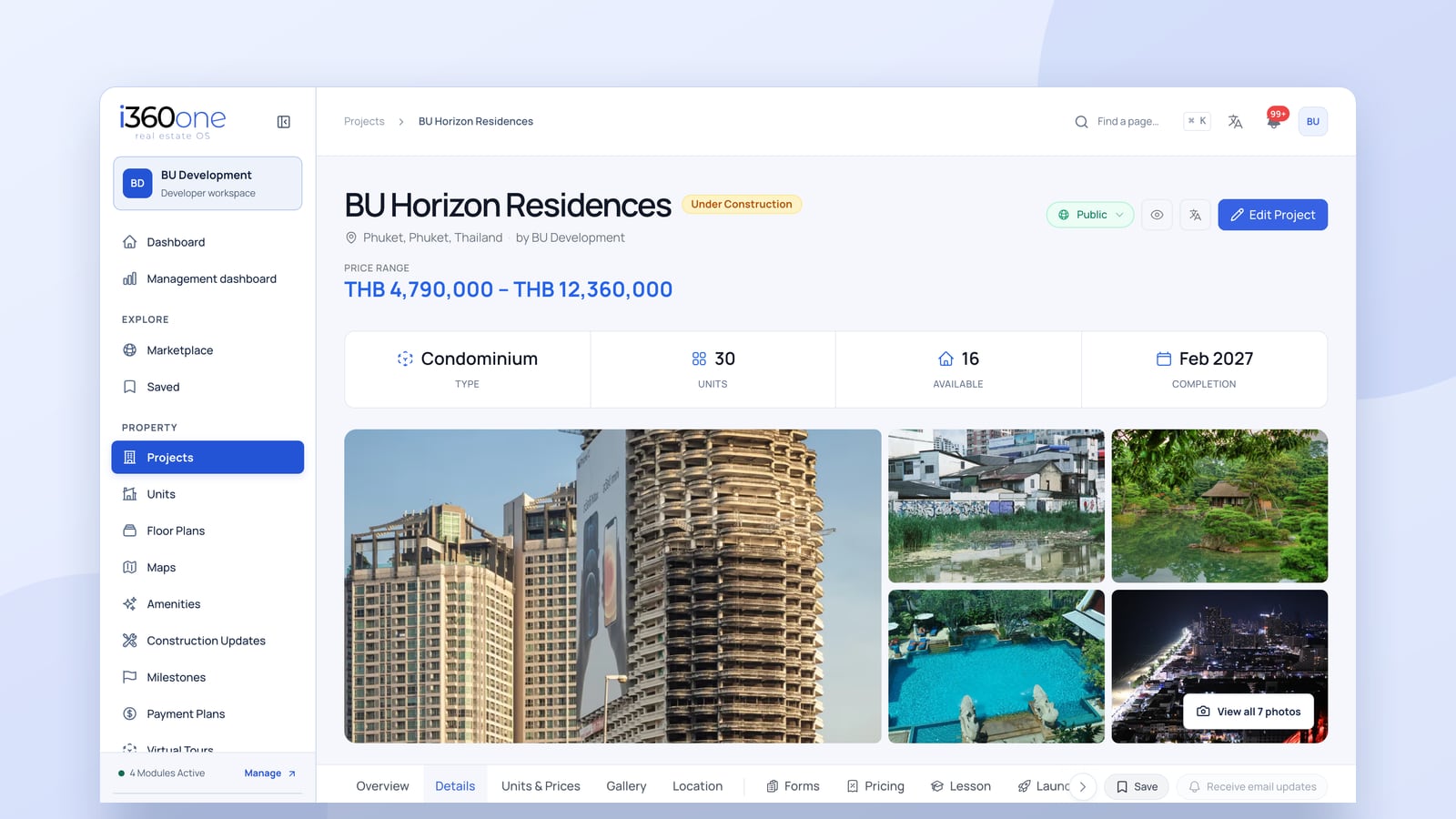
A construction update in i360one is a short report with a title, a description and photos, attached to the project or to specific units. It is published on the project page, so buyers and agencies see it in the same place they first looked at the project.
The most effective updates are boring in the best way: regular, factual, with photos taken from the same spots each time, so progress is visible. A monthly update with six honest photos does more for trust than a quarterly newsletter full of renders.
Because the text is translated automatically, a Thai site team's update reaches Chinese and Russian buyers in their own language. (More on four languages.)
Milestones with dates
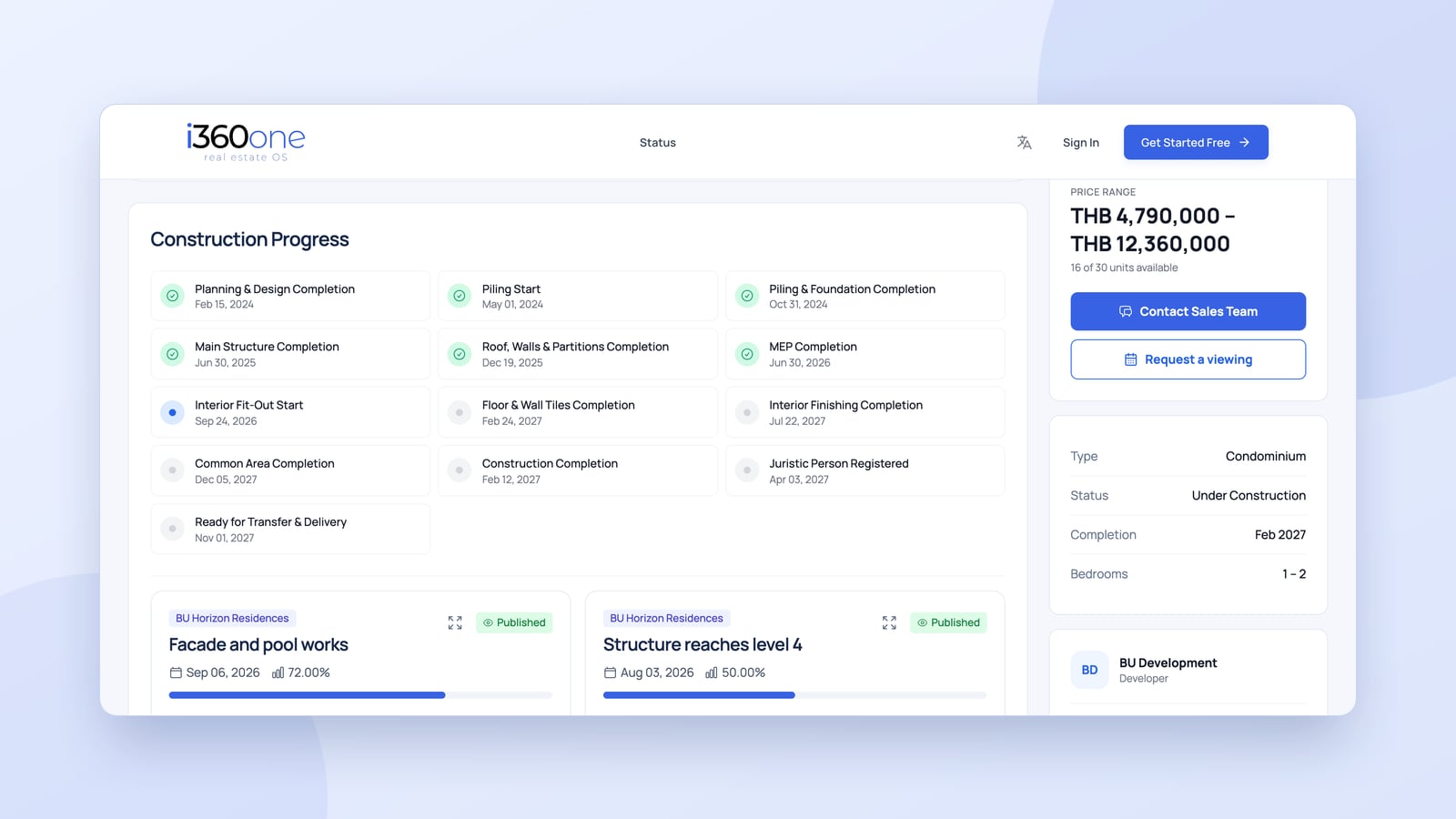
Updates tell the story; milestones give the structure. Each project, and each unit where it differs, keeps its own list of milestones, such as foundation, structure, roof, interiors and handover, each with a target date, a status and the date it was completed.
You do not have to invent the list. Starter lists for condos, villas, houses and land give a sensible set to begin with, and you add or remove milestones to match the real project. The milestones appear as a timeline on the project page and in the project's brochure, so the schedule buyers see is the one your team maintains.
Milestones also connect to money. An instalment can fall due when its milestone completes, so marking the structure finished both tells buyers and sets their due dates. (How milestone payments work.)
Announcements to the people who follow the project
Some news should go to people rather than wait to be found: a topping-out ceremony, a change to the handover schedule, an invitation to inspect the show unit.
An announcement has a title, a text, a photo, and optionally the one unit it concerns. You can publish it now or schedule it. When it is published, the people following the project, or that unit, get one e-mail, and the announcement appears in their property feed in their language.
The buyer's own view
Buyers can also look things up themselves. Their own views show the properties they own or are buying, the deals they are part of and the invoices issued to them. The answer to "what do I still owe, and when?" is there without a call to your office.
Why this pays for itself
Every update you publish is a phone call your team does not take. Every milestone kept current is a rumour that does not start. And buyers who felt informed during construction are the ones who refer friends and buy again.
The work is small because it is connected: one update, published once, reaches the project page, the buyers who follow it, every agency that shows the project, and all four languages at once.