One property, one record: why connected data sells more real estate
Most sales mistakes in real estate start with two copies of the same fact. Here is what changes when every team works from one record for each unit.
A buyer asks your agent for the price of a two-bedroom unit on the seventh floor. The agent opens last month's PDF price list. Your sales office has a newer spreadsheet. The website still shows the launch price. Three answers for one unit, and the buyer notices every one of them.
Nobody in that story did anything wrong. The agent used the file they were given. The sales office updated their sheet. The website was correct on the day it was built. The problem is not people. The problem is copies.
The real cost of copies
Every copy of a fact is a promise to keep it up to date. A typical project in Thailand keeps the same unit information in five or six places at once:
- the price list PDF that goes out to agencies,
- the brochure,
- the project website,
- listings on portals,
- the spreadsheet in the sales office,
- the accounting file that tracks who has paid what.
When one unit is reserved, how many of those change on the same day? Usually some of them. That gap is where the expensive mistakes come from:
- An agency promises a unit to a client that was reserved yesterday, and your developer relationship takes the hit.
- A brochure shows a floor plan from before the last design revision.
- Accounting chases an instalment the buyer already paid, because the deal sheet and the bank record never meet.
- The website keeps showing units that sold months ago, and buyers learn not to trust it.
Each mistake looks small. Together they cost deals, commissions and reputation, and they eat hours that should go into selling.
One record, many views
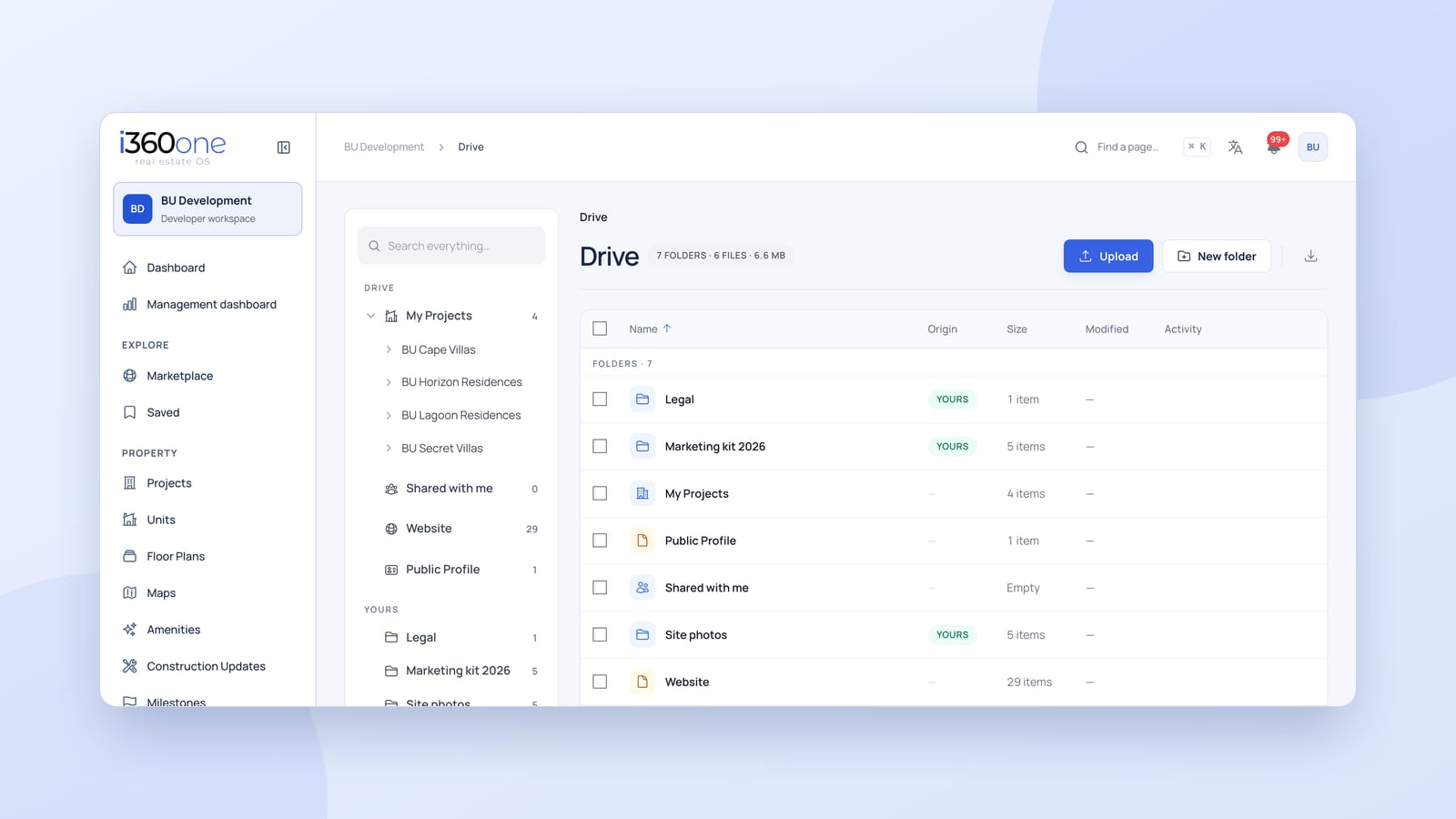
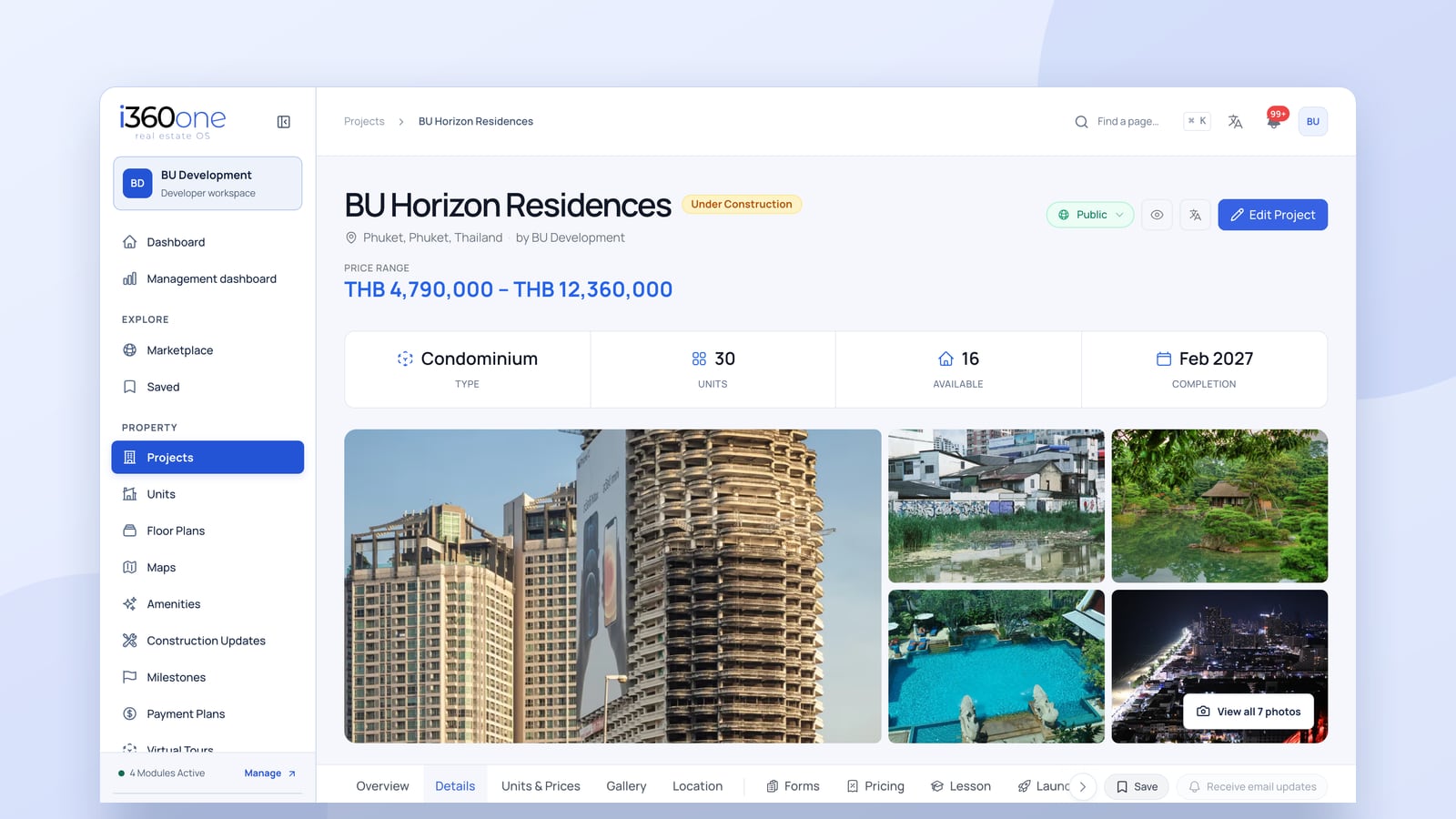
i360one is built on a simple rule: each unit exists once. Its number, layout, size, price, status, photos and floor plan live in one record. Everything else is a view of that record, not a copy of it.
| Where it appears | What it reads from the unit record |
|---|---|
| Your workspace | inventory lists, the deal pipeline, payment schedules |
| Your own website | live listing blocks with available units, prices and floor plans |
| i360.homes | the public page for the project and for each unit |
| PDF exports | project presentations, unit proposals and price lists, generated when you ask for them |
| Partner agencies | the same unit, at the access level you gave them |
Change a unit to Reserved once, and every one of those views shows Reserved. Nobody re-exports a price list. Nobody emails a correction to twenty agencies. The next presentation an agent generates already has the new status, because it is built from the record at that moment.
Why this is not a portal
Portals work the other way round. Each agency posts its own version of your unit, with its own photos, its own description and sometimes its own price. The duplicates are part of how portals make money, and they are why a buyer can find the same condo listed eight times at six prices.
In i360one the developer owns the record. Agencies are distribution: they show the same unit, switched on for them, instead of writing a second copy. When the developer changes the price, every agency that shows the unit shows the new price. When the unit sells, it stops being offered everywhere at once.
That is better for buyers, who see one honest listing. It is better for agencies, who stop selling from stale files. And it is better for developers, who finally know what is being said about their project.
What connected data changes in daily work
The benefit is not one feature. It is the absence of a whole category of work:
- Sales answers from live availability instead of from the last file someone sent.
- Marketing stops rebuilding the website and presentations every time a price moves.
- Finance sees the unit, the agreed price, the payment plan and the invoices on the same deal that sales closed, so the numbers match without a reconciliation meeting.
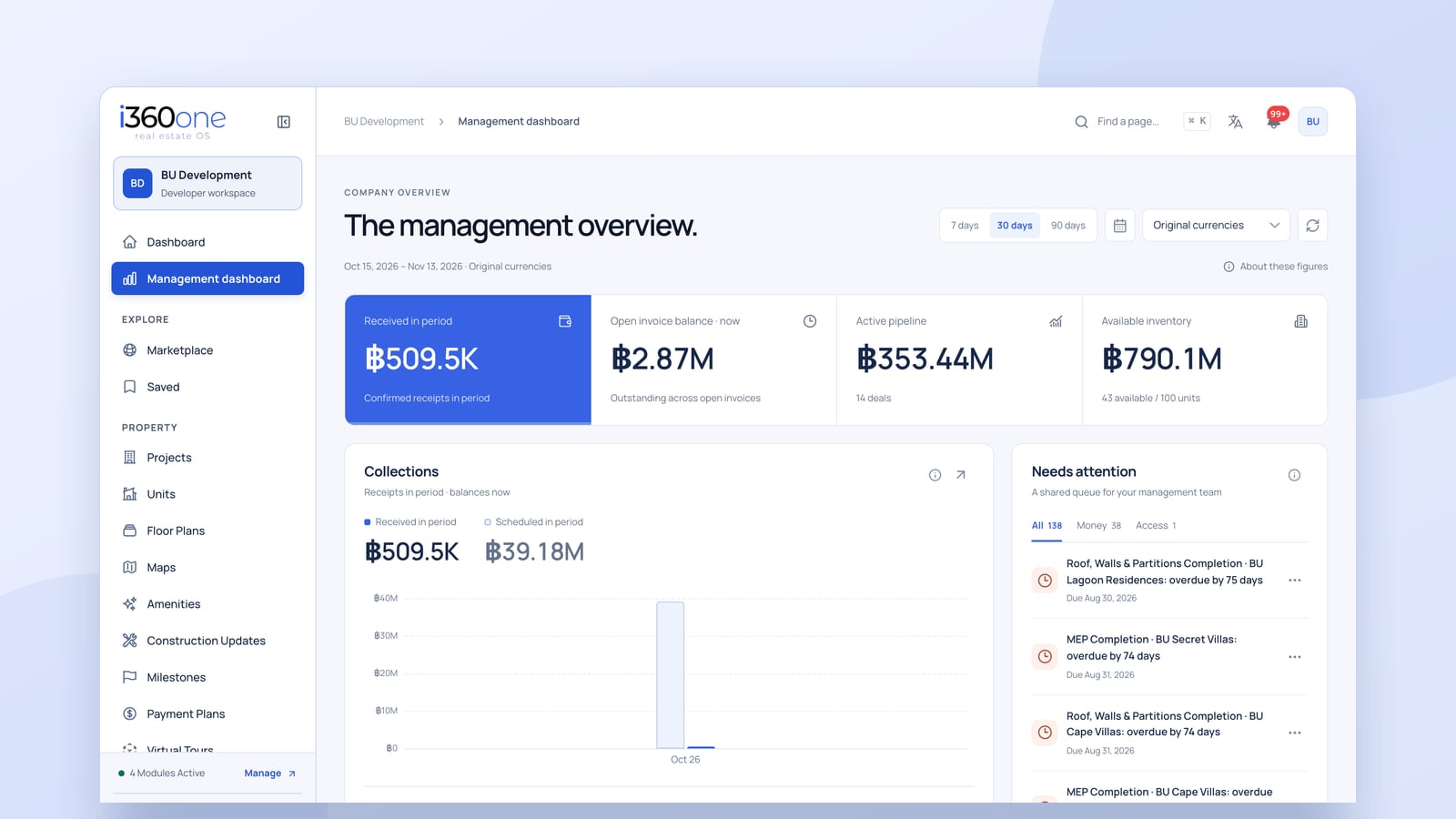
- Management reads reports from the same records the team works in, instead of reconstructing the month from spreadsheets at month-end.
A team that stops maintaining copies gets those hours back. More importantly, it stops making the mistakes that copies cause.
Where to start
If your business runs on spreadsheets and PDFs today, you do not have to move everything at once. Start with the inventory, because everything else hangs off it:
- Import your current price list (how the import works).
- Check the statuses: which units are available, reserved, on hold or sold.
- Connect one view at a time: your website, then partner agencies, then deals and payments.
Each step removes a copy you used to maintain by hand. After the third one, the question "which price list is the right one?" simply stops coming up.