Selling property in Thai, English, Chinese and Russian without four times the work
Buyers in Thailand speak at least four languages, but most sales material exists in one. Here is how to serve all four without maintaining four versions of everything.
Property buyers in Thailand read Thai, English, Chinese and Russian, and many of them read only one of these comfortably. Yet most project material exists in one language, sometimes two. The brochure is in English, the price list is in Thai, and a Chinese buyer gets a phone photo of both with a translation app on top.
Every buyer who has to struggle with the language of your material is a buyer who trusts you a little less, and who may find a competitor who speaks to them properly.
Why four versions never stay in sync
The usual answer is to translate everything once. That works on launch day. Then the description changes, a new amenity is added, the payment terms are updated, and now four documents need the same edit. In practice the English one gets it, the Thai one gets it later, and the Chinese and Russian versions quietly keep the old text.
Four languages done by hand means four copies, and copies drift. That is the same problem as scattered price lists, multiplied by four.
Write once, translated automatically
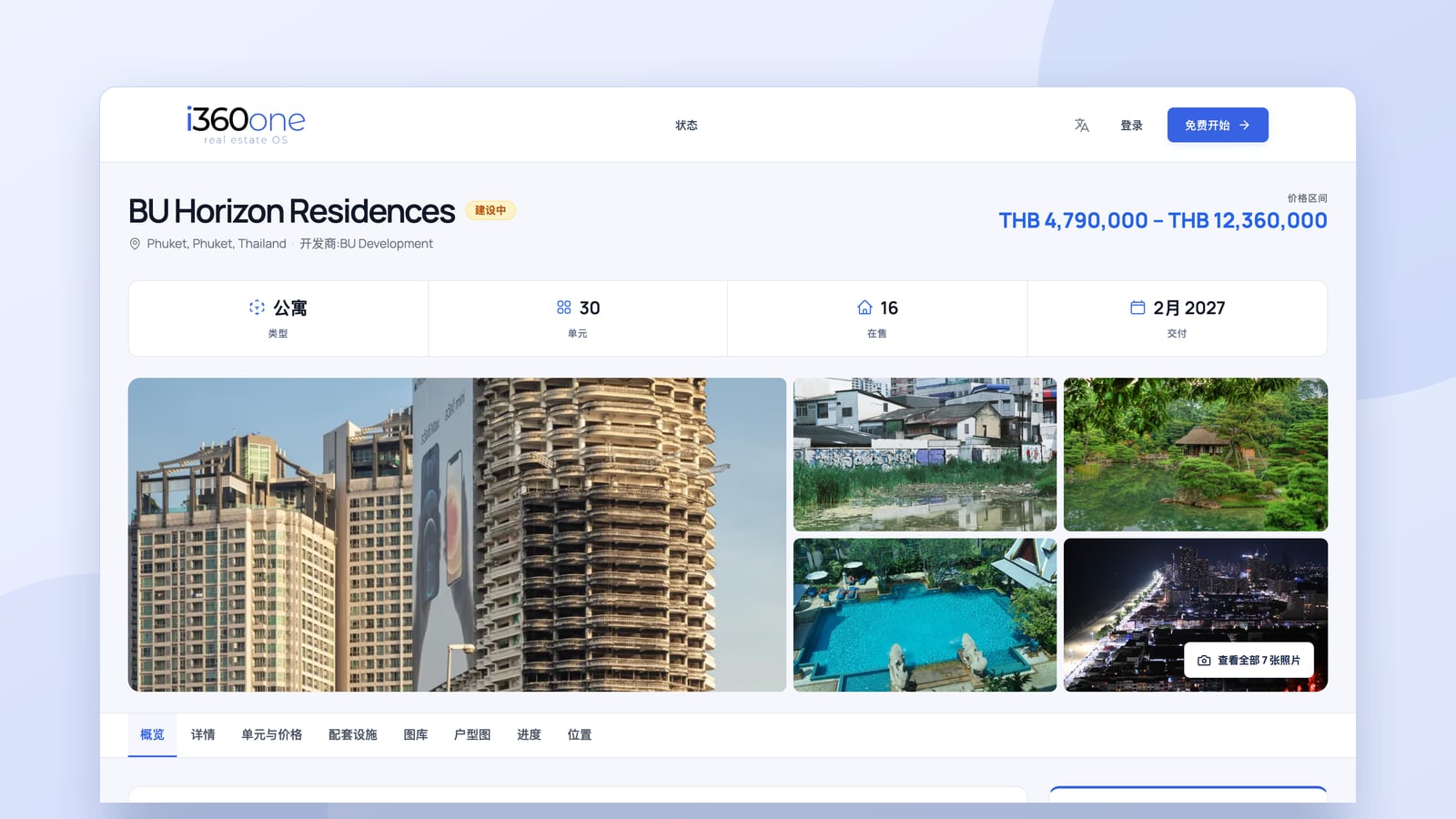
In i360one, the text you write is translated into the other three languages when you save it. That covers the things buyers actually read: project and unit descriptions, amenities, nearby places, construction updates, milestones, payment terms and your website's pages.
A few rules keep the translations trustworthy:
- Your original is never overwritten. You always edit the text you wrote; the translations are made from it.
- Names stay names. Project names, buildings, malls, schools and hospitals are kept exactly as written. A place name like Bang Tao is written the way each language normally writes it.
- Numbers stay exact. Prices, sizes, unit numbers and dates are never changed. Thai dates use Gregorian years throughout.
- You can correct any translation by hand. A correction you make is kept until the original text changes.
When you change the original, the translations are updated too. Nobody has to remember which versions need the edit.
Each language has its own address
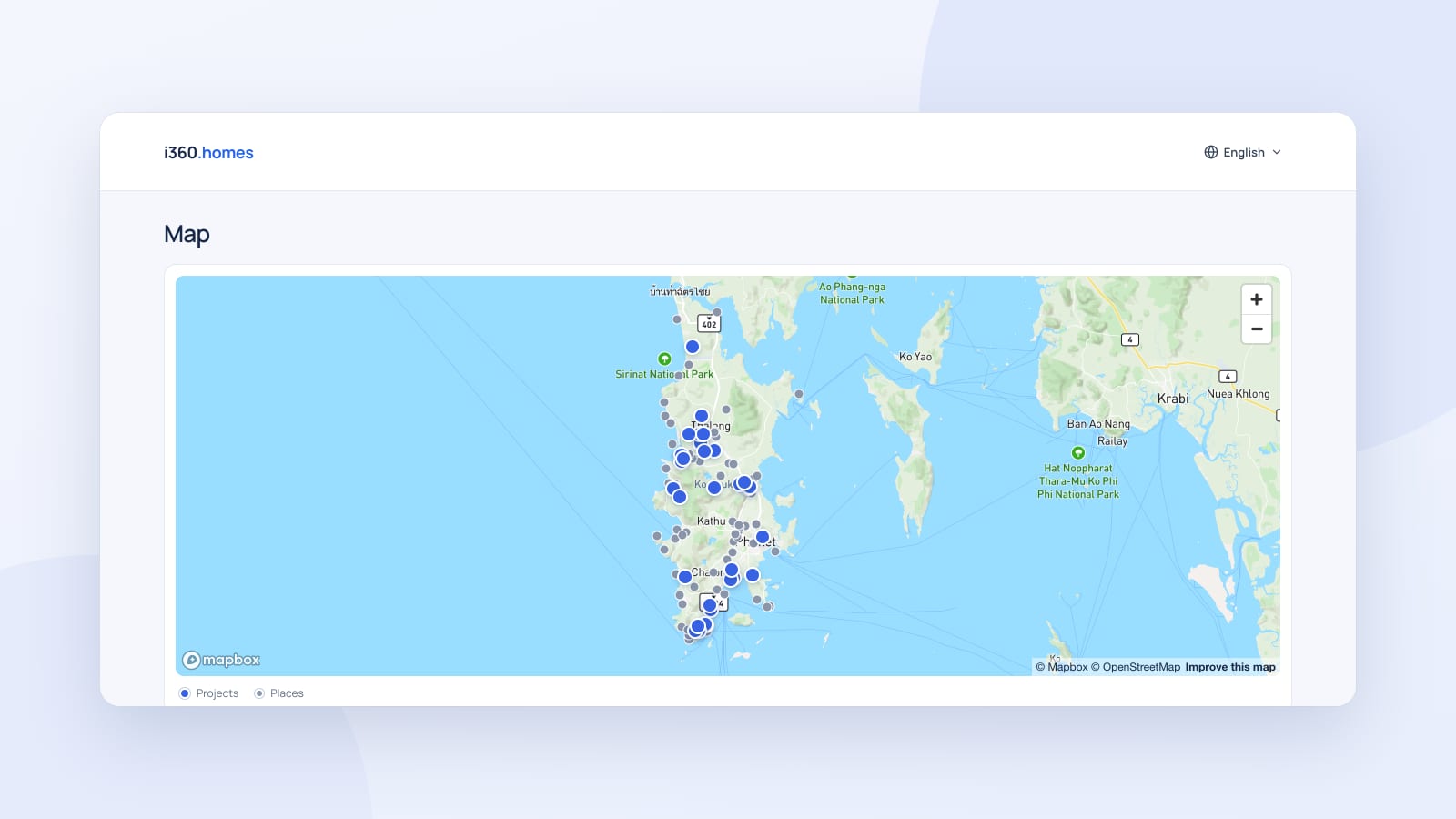
A translation that search engines cannot find is only half useful. On i360.homes and on websites built with i360one, each language lives at its own address, and every page tells search engines which language versions exist. A buyer searching in Thai finds the Thai page; a buyer searching in Russian finds the Russian one.
Each vendor website chooses which of the four languages it serves, so a business that only sells to Thai and English speakers does not have to show Chinese and Russian versions.
Conversations in the buyer's language
Listings are only the start. The harder part is the conversation that follows: the questions on WhatsApp, LINE, Telegram or e-mail, often outside office hours, in whatever language the buyer prefers.
In the shared inbox, a customer's messages are shown in the language of the person reading them, and a reply written in your team's language is translated into the customer's language before it is sent. Your Thai-speaking sales coordinator can answer a Russian buyer properly, without copying text in and out of a translation app.
The AI sales executive replies in the language the customer writes in, using your live inventory and materials. (How the shared inbox works.)
The interface speaks your team's language too
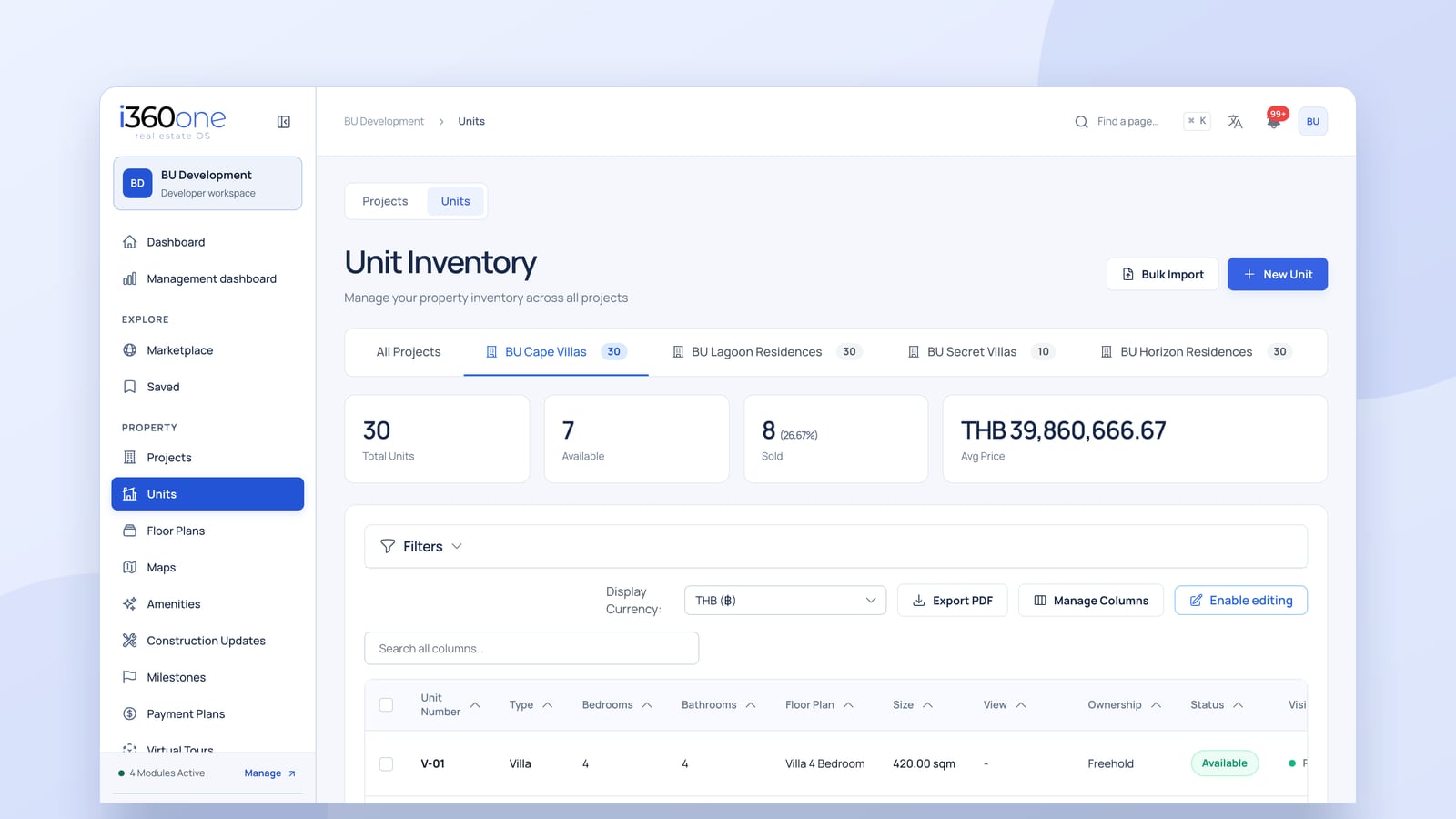
The same applies inside the workspace. Each person chooses whether they work in English, Thai, Chinese or Russian, and the screens follow. A mixed team, a Thai office manager, a Chinese-speaking agent and an English-speaking director, works in one system, each in their own language, on the same records.
What it adds up to
Serving four languages used to mean four times the work, so most businesses served one or two and accepted the lost buyers. When translation is part of the system, the extra cost of the third and fourth language is close to nothing, and the buyer who reads only Chinese gets the same accurate, current information as everyone else.