A property website that updates itself
Most project websites are correct on launch day and slowly wrong after that. A website built on live inventory stays right without anyone editing it.
Most project websites are correct on launch day. Then prices move, units sell, a phase opens, the floor plans are revised, and the website slowly drifts away from the truth. Updating it means a message to the web agency, a wait, and an invoice.
Buyers notice. A site that still shows units sold months ago teaches visitors not to believe what they read there, and the enquiries it does bring start with "is this still available?"
Why websites go stale
The website is usually built as a separate thing. Someone copies the project description, uploads the photos, types in the units and the prices, and the site is finished. From that day on it is one more copy of the inventory, with nobody whose job it is to keep it in step.
The fix is not a more disciplined web agency. The fix is a website that does not hold its own copy at all.
Built on the inventory, not beside it
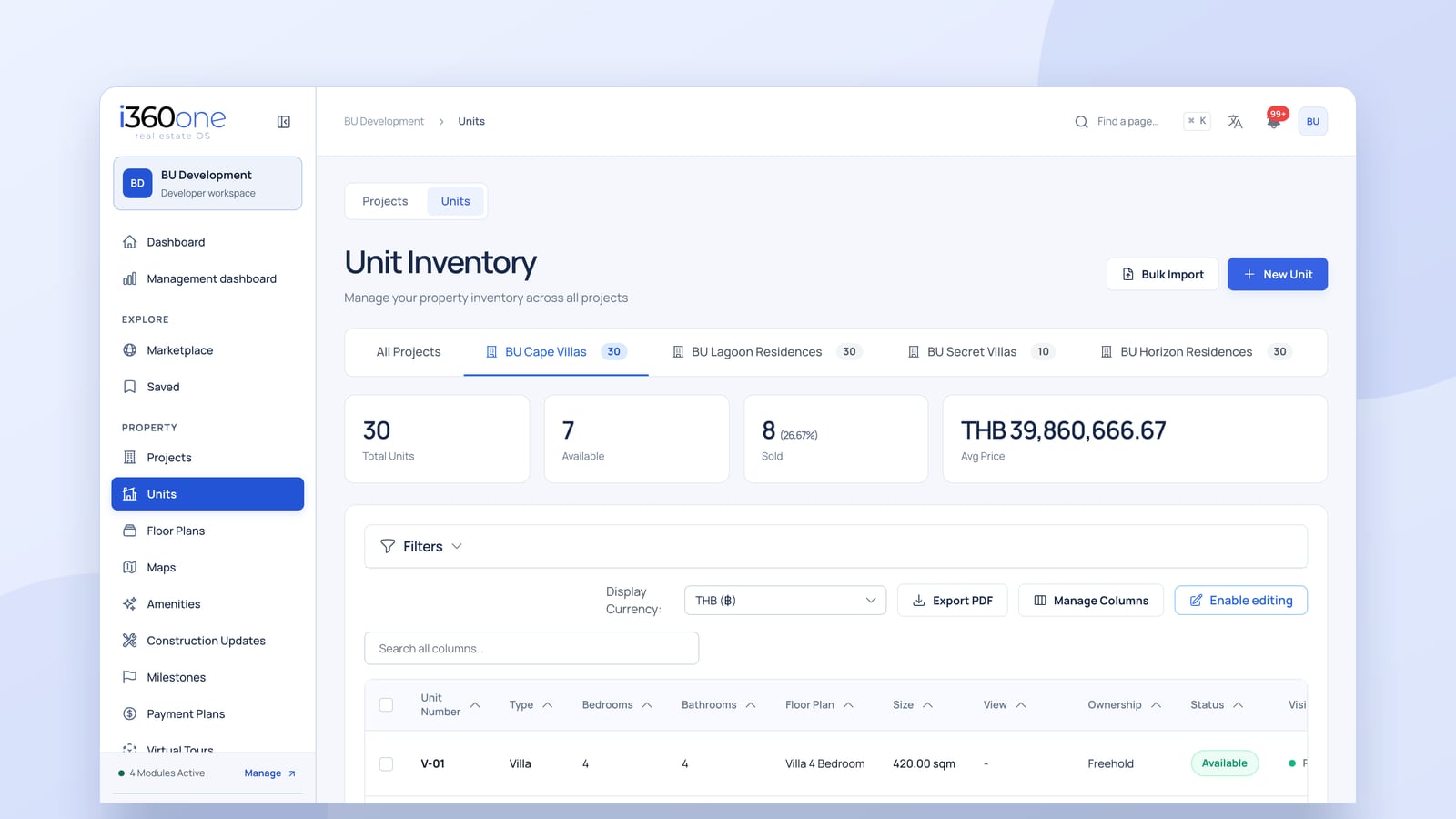
A website made with i360one's website builder reads its property content from your workspace. The listing blocks on the site show your projects and units directly: availability, prices, layouts, floor plans, photos, amenities and nearby places.
So the work you already do keeps the site current:
- Reserve a unit in the workspace, and the site shows it as reserved.
- Change a price in bulk, and every page that shows those units has the new price.
- Replace a floor plan once, and the site uses the new one everywhere.
- Publish a new project, and it can appear on the site without a single page being edited.
You still decide what is public. Visibility is set per project and per unit, and private things stay private.
Your own domain, or a ready address today
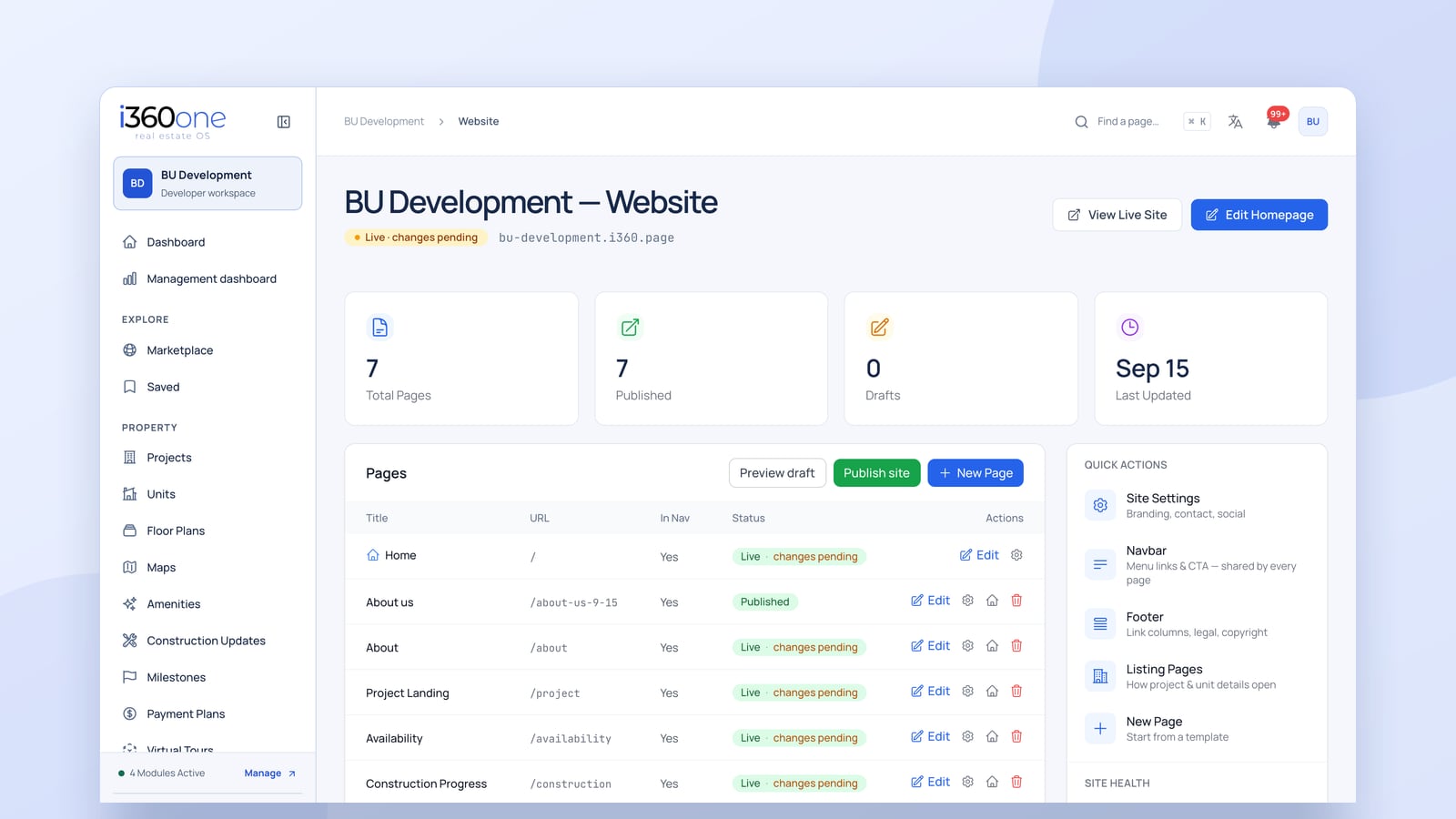
A website should carry your brand. Connect your own domain and the site is served there. If you do not have a domain yet, or want to start before the DNS work is done, the site is live straight away on a free address with no setup, and you can add your own domain later.
Pages are designed from templates and edited visually: home, about, projects, contact, and the pages your business needs. The design stays yours; the property data stays live.
Four languages, one set of work
Thailand's property buyers read Thai, English, Chinese and Russian. Each website chooses which of these languages it serves. Text you write in one language is translated into the others automatically, and you can correct any translation by hand. Each language has its own address, so search engines can show the right version to the right buyer. (More on selling in four languages.)
Found by search engines and by buyers
A website only sells if people find it. Each site gets its own sitemap, page titles and descriptions, and each language version is marked as such for search engines. Units come from inventory, so a sold unit is not advertised as available to a search engine any more than to a visitor.
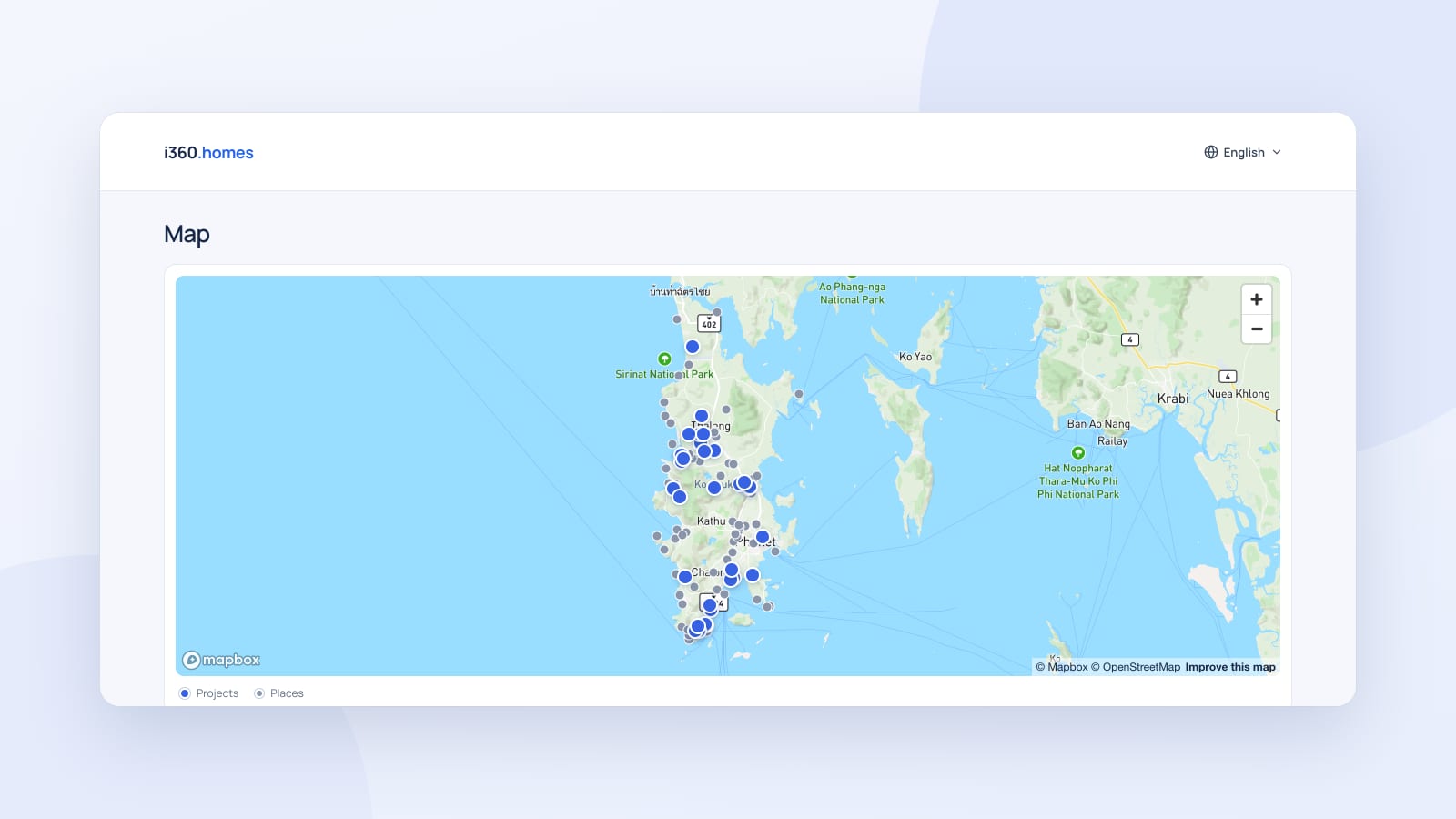
Published projects can also appear on i360.homes, the public marketplace, where buyers browse new projects straight from developers. It is the same record again: one project, shown on your site and on the marketplace, never re-entered.
Knowing who looked
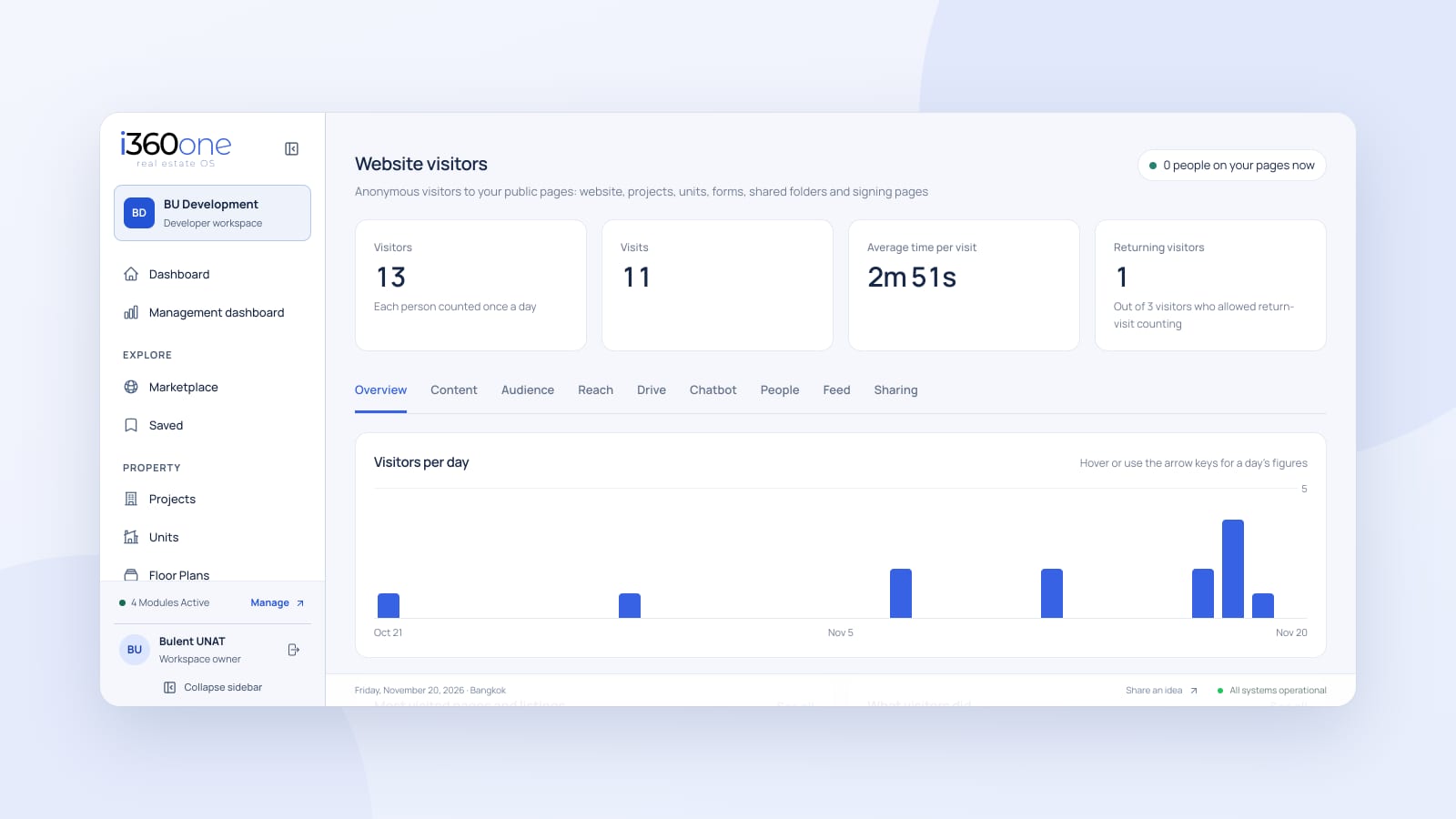
A website is also a source of signals. Personal links let you send one client a link to a project, a unit or a page and see when they open it and how long they look. The page tells the visitor that you can see the visit, so the signal comes without a trick. "They opened the villa page three times this week" is a better reason to call than any reminder in a calendar.
The website as part of the system
The point is not a nicer website. It is a website that is no longer separate work. When the site is part of the same system as your inventory, your deals and your team, keeping it right costs nothing, and it becomes what a property website should be: the most accurate place to learn about your projects.