From proposal to signature: documents that fill themselves
The same names, unit numbers and prices get typed into proposals, reservation forms and contracts again and again. Each retyping is a chance for an error. There is no need for it.
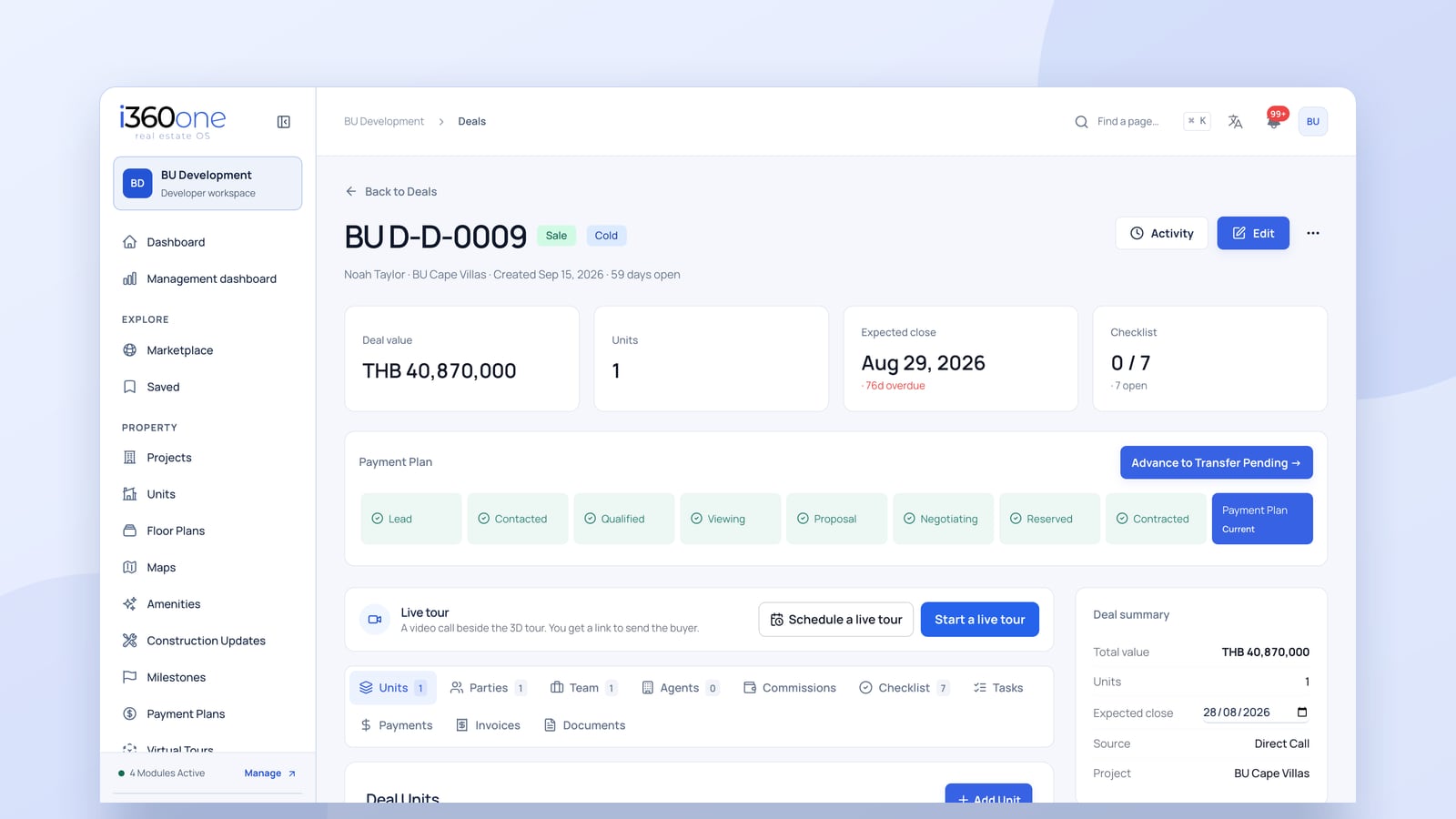
Watch a property deal from the buyer's first "yes" to the signed contract, and count how many times the same facts are typed: the buyer's name, passport number and address, the unit number, the size, the price, the discount, the payment schedule. Proposal, reservation form, contract, payment schedule, invoice. Five documents, the same facts, typed five times.
Every retyping is a chance for an error. A transposed digit in a price or the wrong unit number on a contract is not a small mistake; it is a legal and commercial problem that surfaces at the worst possible moment.
The deal as the single source
In i360one, a deal holds the facts of the sale in one place:
- the parties: buyers, co-buyers, sellers, and anyone else who has to sign or be informed,
- the team: the agents involved and the staff responsible,
- the property: one unit or several, from live inventory, at the agreed price,
- the payment schedule: instalments, due dates and what has been paid,
- the steps: a checklist of what must happen before the deal moves on.
Documents are generated from the deal. The proposal, the contract and the payment schedule read the same parties, the same unit and the same price, so they cannot disagree with each other.
Proposals in minutes, not hours
A good proposal is personal and precise: the units the buyer is considering, their layouts and floor plans, the prices, the payment plan, the project's highlights. Built by hand, it takes an evening. Built from the deal, it takes a few clicks.
You choose what goes in, generate the PDF, and either download it or e-mail it straight to the people on the deal, with others in copy. Because it is built from live data, the prices and availability in the proposal are the ones that are true today.
The same approach works for the whole project: a project presentation is generated from the project's current information, and a price list export covers exactly the units you select.
Templates for contracts and everything else
Every business has its own reservation agreement, sale and purchase contract and addendums. Document templates hold your wording once; each document made from a template is filled from the deal it belongs to.
When the lawyer revises a clause, you change the template, and the next contract uses the new wording. No one has to hunt down the latest Word file before sending a contract.
Signing without printers and couriers
Buyers of Thai property are often abroad. Collecting signatures by courier, or by print, sign, scan and e-mail, adds days to every deal and loses pages along the way.
With digital signatures you decide who has to sign each document, generate signing links for people outside your company, and set a deadline. You can see at a glance who has signed and who has not, and reminders go to the people still pending, so nobody on your team has to chase each signer by hand.
Documents where you expect them
Every document stays attached to the contact, the unit and the deal it belongs to. Six months later, when someone asks for the signed contract for unit B-0805, it is on the deal, not in someone's downloads folder.
Identity documents work the same way. Buyers' passports and other KYC documents are collected on the contact, with your team's review status recorded, so the compliance check is visible to everyone who needs to see it.
Repeatable deals, consistent quality
Most developers sell the same kind of deal over and over: a reservation, a deposit, a contract, a schedule of instalments, a transfer. Deal templates capture that structure, with its stages, its checklist and its documents, so every new deal starts complete instead of from an empty form.
The checklist matters most at the end. Handover has many small steps, and a visible list of what is done and what is still open is how a deal closes without a forgotten item.
Fewer errors, faster deals
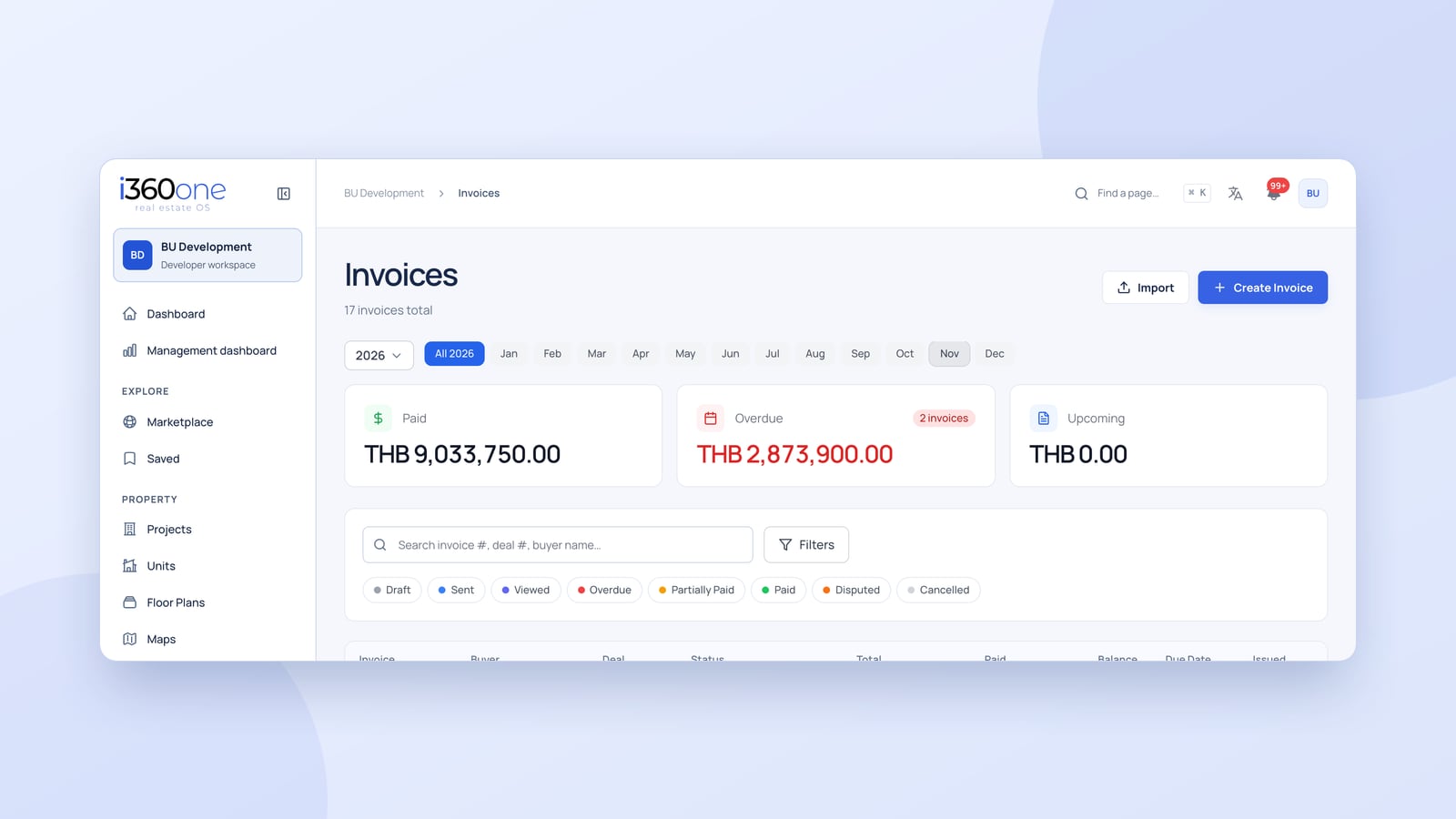
The benefit is not that documents look better, although they do. It is that a whole class of errors disappears, because the facts are entered once, and that a deal moves from "yes" to signed in days instead of weeks. Then the work moves on to payments and invoices, from the same deal.